-
Deváté zastavení industriální stezky u řeky Svitavy
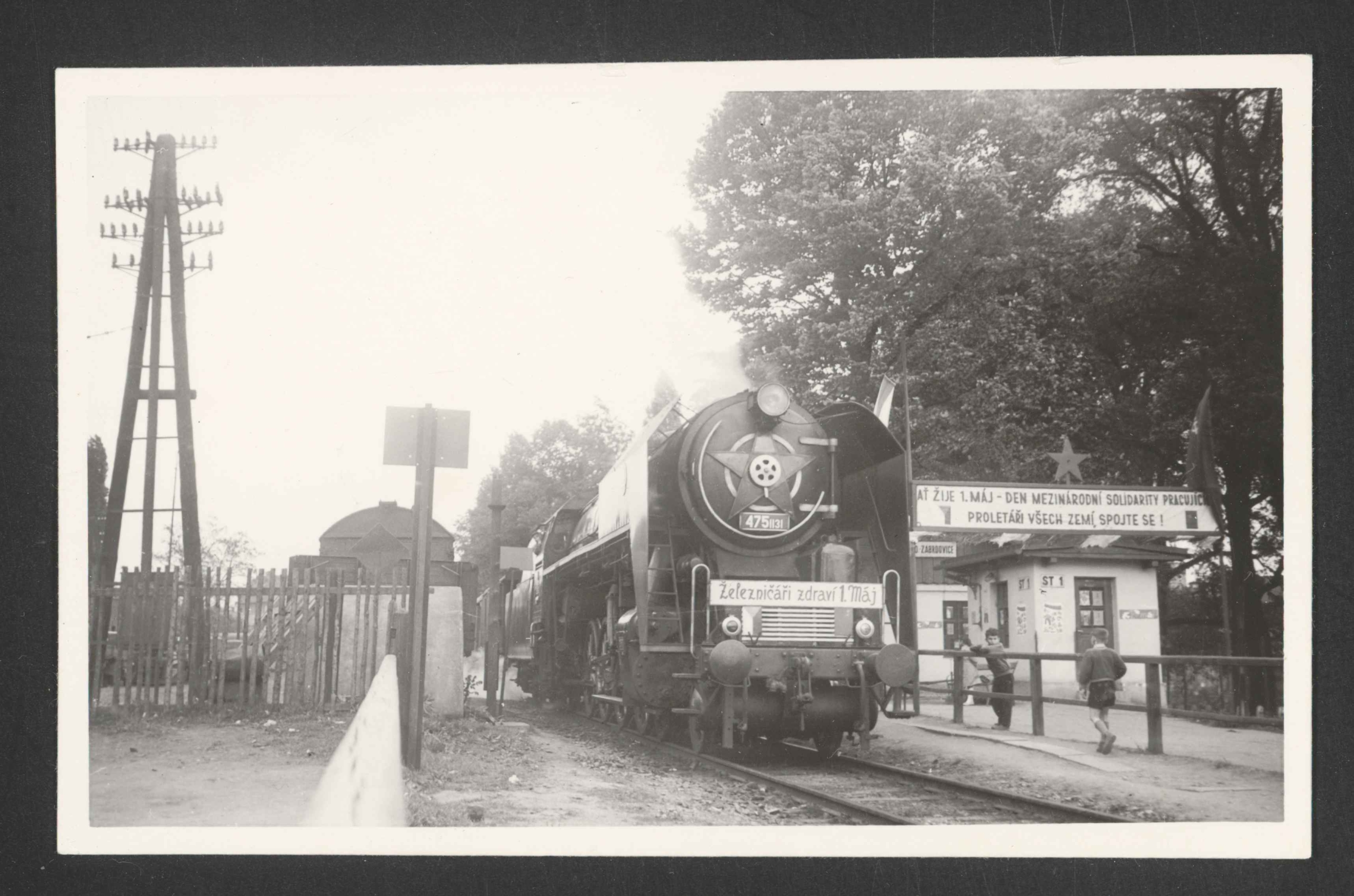
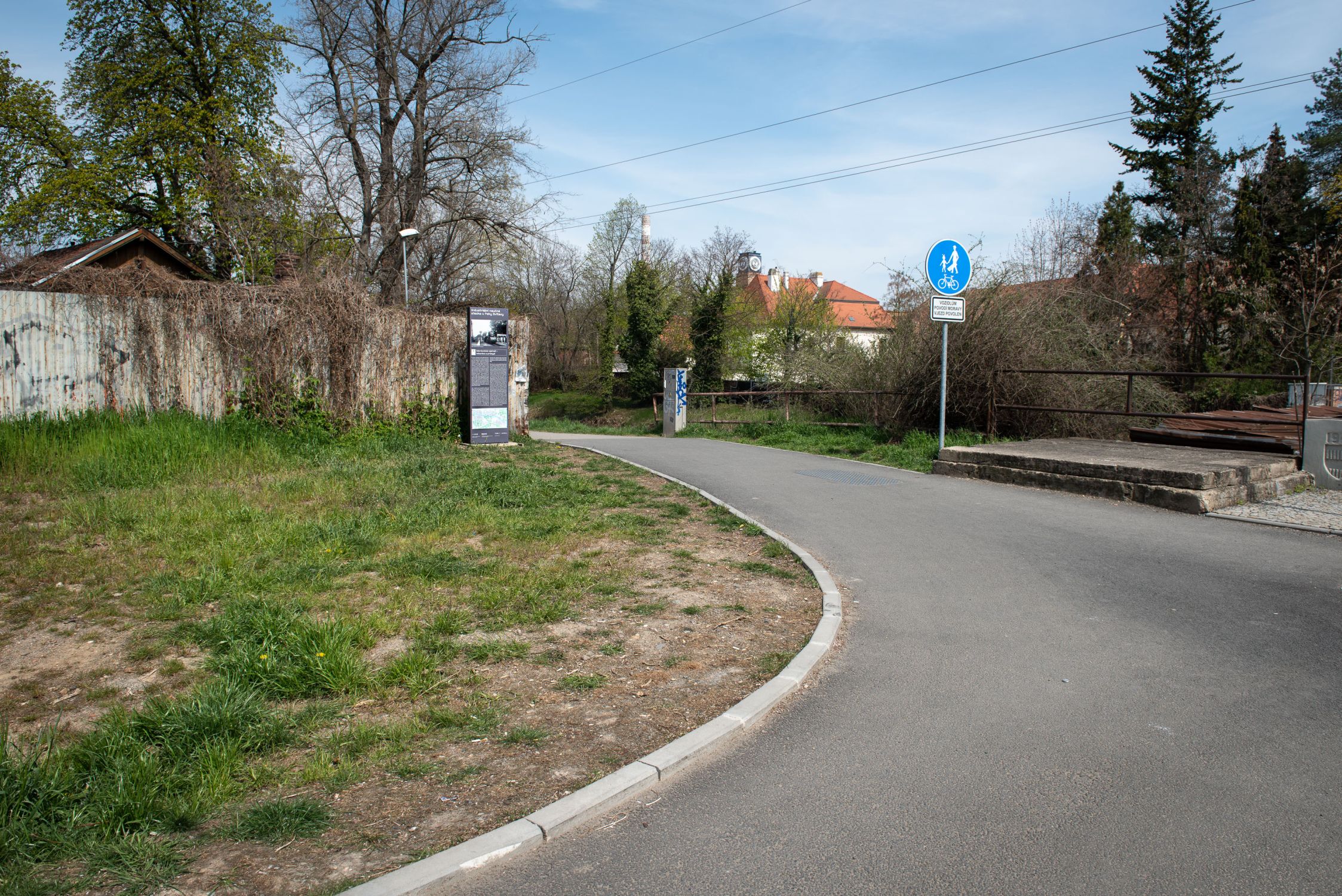
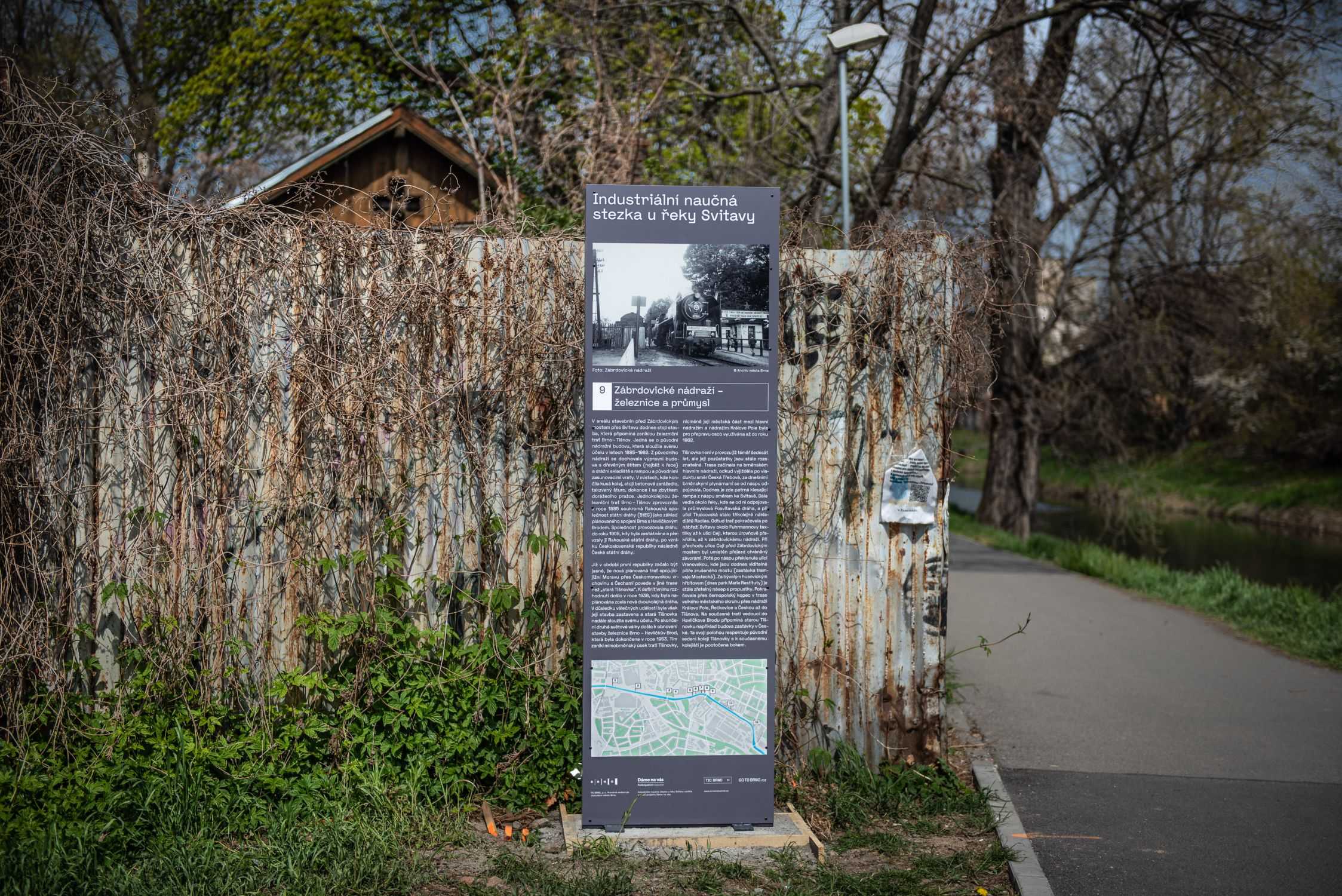
Next to the Zábrdovice bridge over the Svitava River, on today’s construction materials store premises, a commemmoration of the defunct Brno-Tišnov railway line can still be found: the original station building, which served its purpose in the years 1885-1962. Alongside the station building with a wooden gable (next to the river), a railway warehouse fitted with a ramp and as well as original sliding doors has been preserved from the former railway station. At the end of the former siding platform, a concrete platform buffer, called “šturc” can still be seen, complete with the remains of the stopping sleeper.
The single-track railway line Brno – Tišnov was put into service in 1885 by the private Austrian State Railways Company (StEG) as a first step towards the planned connection between Brno and Havlíčkův Brod. This company operated the railway until 1909, when it was nationalized and taken over by the Austrian State Railways, followed by the Czech State Railways after the establishment of the Czechoslovak Republic.
During the First Republic period it was already getting clear that the new planned railaway line connecting South Moravia and Bohemia through the Bohemian-Moravian Highlands would follow a different route from the so-called “old Tišnovka” line. The final decision in this matter came in 1938, followed by planning an entirely new double-track railway line. However, as a result of wartime events, its construction was halted, and the old Tišnovka line continued to serve its purpose. The Brno – Havlíčkův Brod railway line construction was resumed after the end of the Second World War and completed in 1953. Thus, the Tišnovka line section laying outside Brno disappeared; however, its inner-city section connecting the main station and the Královo Pole station remained in use for passenger transport until 1962.
Although the Tišnovka line has been out of operation for almost six decades, its remains are still recognizable. The line started at the Brno main railway station, from where it passed over the viaduct in the direction of Česká Třebová, leaving the embankment past today’s Brno gasworks. The downward ramp from the embankment towards Svitava can still be seen in this spot. Farther on, it led around the river, separating from the industrial Posvitavská railway and passing the three-track Radlas freight terminal on Tkalcovská Street. From there, the line continued along the Svitava riverbank past Fuhrmann’s textile factory to Cejl Street, level-crossing it on its way to the Zábrdovice railway station right in front of the Zábrdovice Bridge with a gate-protected crossing. Next, the line overran Vranovská Street over the embankment, where the pillars of the cancelled bridge (tram stop Mostecká) are still visible. Past the former Husovice cemetery (now the Marie Restituta Park), the embankment with culverts can still be recognized. The railway then continued over the Černá pole hill along the route of today’s large city ring road through the Královo Pole station, Řečkovice and Česká to Tišnov. Along the current line to Havlíčkův Brod, the station building in Česká, amongst others, still reminds us of the old Tišnovka line. Its position honors the original alignment of old Tišnovka, therefore standing sideways to the current track.
Photo gallery
Tell your friends about zábrdovickém nádraží – železnici a průmyslu!
Similar places nearby
-
Mitop / The textile production demise phenomenon
In 1890, the Austrian Felt Mills Joint Stock Company was co-founded by B. Engel & Co., Adolf Löw & Son and Seidl & Jellinek.
-
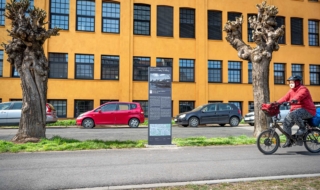
Berans’ Söhne – Zbrojovka
The present-day Zbrojovka (Brno Armory) complex was created in 1918 by converting the former Berans’ Söhne textile factory, standing on the banks of the Svitava River since 1894.