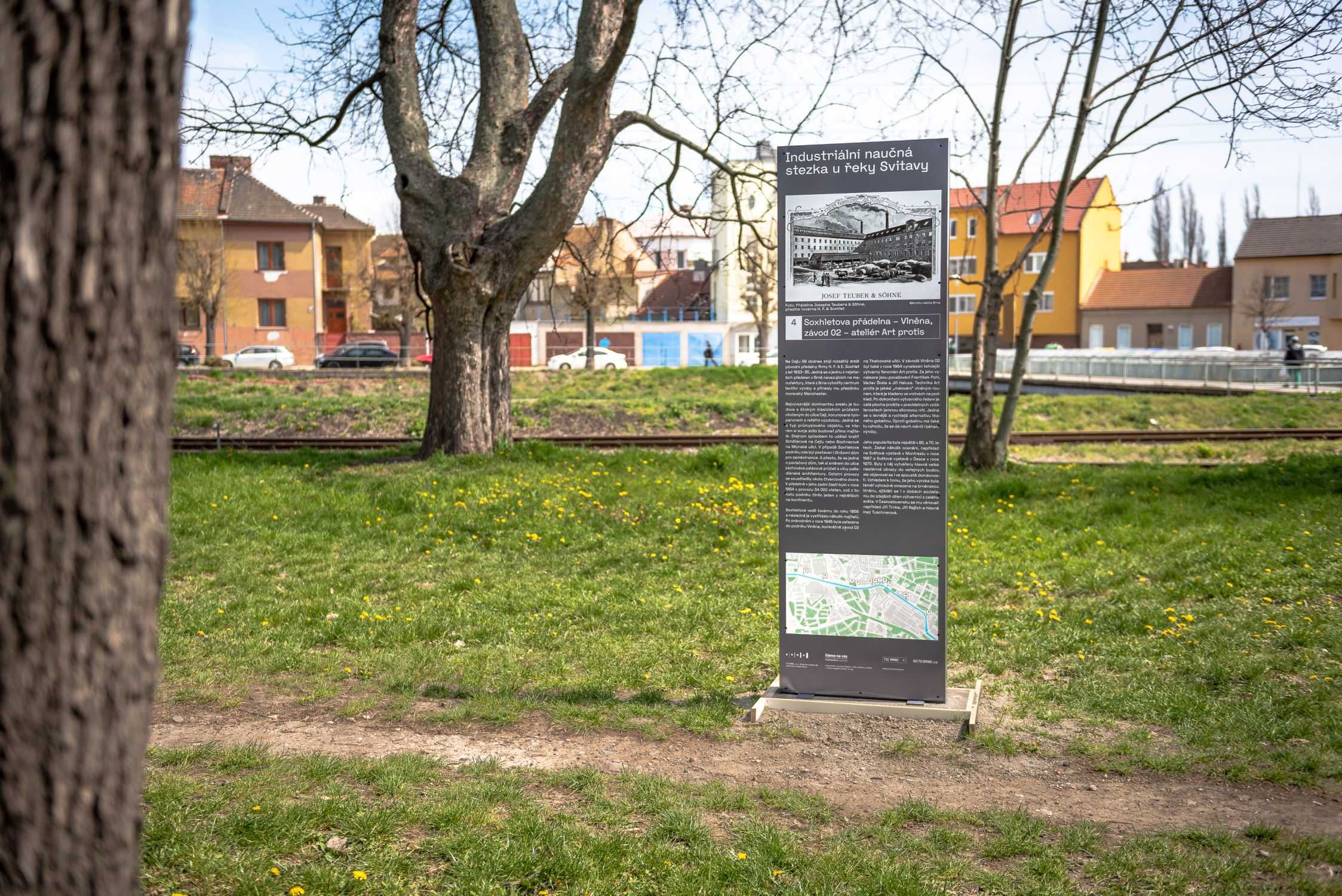
Svitava river industrial educational trail
Soxhlet textile mill / Vlněna, plant 02 / The Art protis studio
-
Čtvrté zastavení industriální stezky u řeky Svitavy
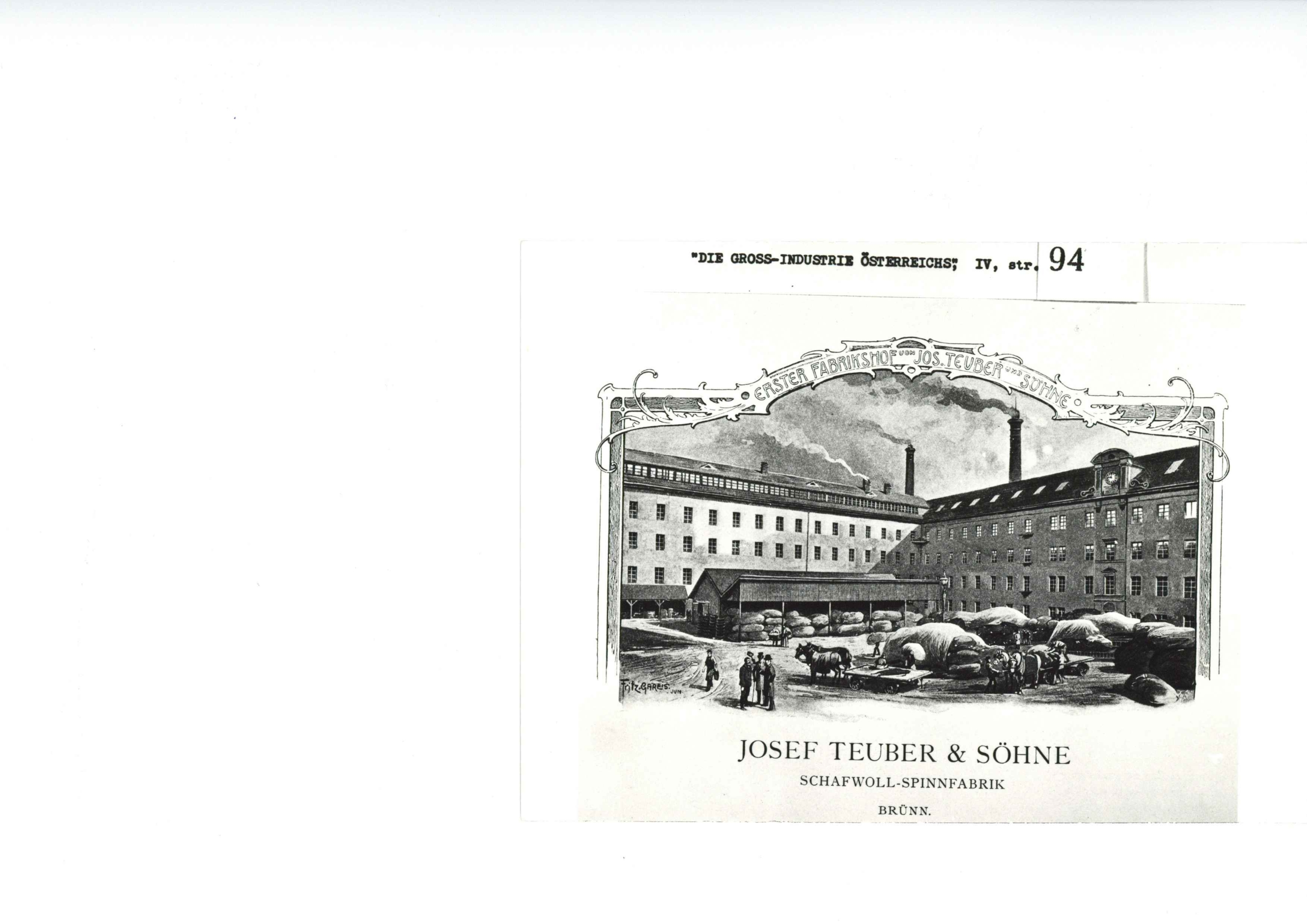
At 68 Cejl Street, the vast complex of the original H. F. & E. Soxhlet textile mill from 1833-35 can still be found. It is one of the oldest spinning mills in Brno, carrying on the torch of the manufactories that made Brno the textile production capital and earned it the Austrian Manchester nickname.
Its most striking feature is a building with a wide neoclassical front facing Cejl Street, topped with a tympanum with relief decoration – a type of industrial building the factory owners typically used for their own residence (for example Schöller brothers on Cejl Street or the Bochners on Mlýnská Street). The Soxhlet company had an apartment house for the employees built here as well, which, despite being a balcony access house, faces the street with a Palladian architecture inspired palace front. The rest of the plant buildings is clustered around a square courtyard. The spinning mill at its back had 34,000 spindles in operation in 1854, making it one of the largest on the continent.
The Soxhlet family ran the factory until 1856, later being succeeded by several different owners. After its nationalisation in 1945, it was incorporated into the Vlněna company, specifically plant 02 on Tkalcovská Street. The “Vlněna 02” also became a birthplace of the “Art protis” technique, an artistic phenomenon of its time invented in 1964, most likely by František Pohl, Václav Škála and Jiří Haluza. The Art protis technique is basically “painting” with layers of raw wool fleece on a woven base. Upon completing the art design, the entire panel is quilted with regular stitches of a fine nylon thread, making the finished piece a cheaper and quicker alternative to woven tapestry. Unlike tapestry, this technique allows changes of the design during production as well.
Art protis was most popular in the 1960s and 1970s, even garnering several awards at the 1967 World Exhibition in Montreal, the 1970 World Exhibition in Osaka, etc. Its largest application was for the creation of large-format public building pieces, but it could be seen in many homes as well. Since its production was almost exclusively confined to the Brno Vlněna, artists from all over the world flocked to the local workshops even during the socialist era. Among the most prominent art protis authors in Czechoslovakia were Jiří Trnka, Jiří Rajlich and especially Inez Tuschnerová.